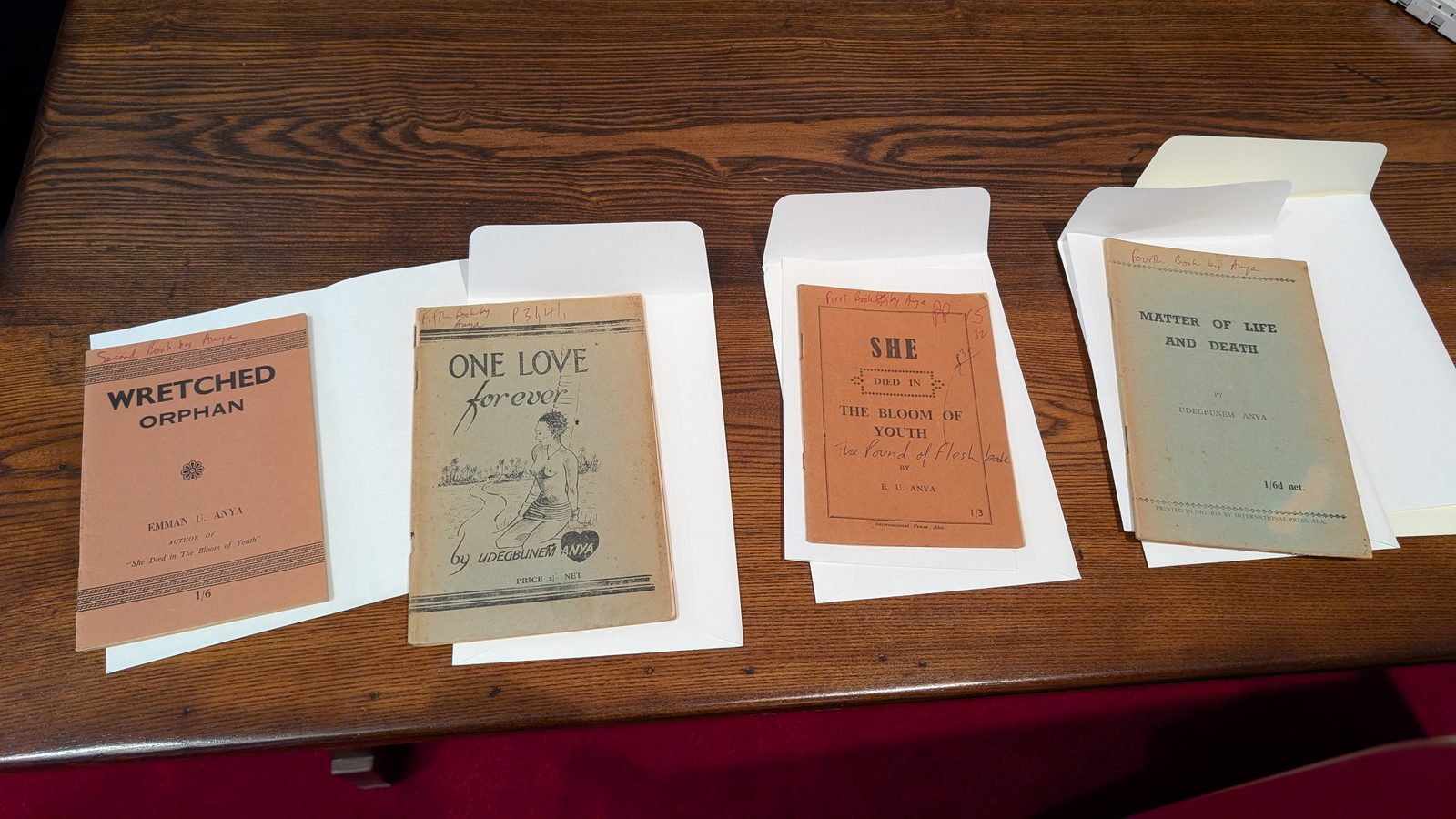
Four of Udegbunem Anya's pamphlets, out of their envelopes for the camera: She Died in the Bloom of Youth, Wretched Orphan, Matter of Life and Death, and One Love Forever. The pencilled notes in the margins — first book by Anya, second book, fourth, fifth — are a cataloguer's, not the author's.
A note on names
One writer, three names. Those four covers carry Udegbunem Anya, Emman U. Anya and E. U. Anya — the same man, and the father of one of the film's interviewees. Writers in this trade changed names between books as a matter of course, which is one reason the pamphlets are so hard to catalogue, and so hard for families to trace.
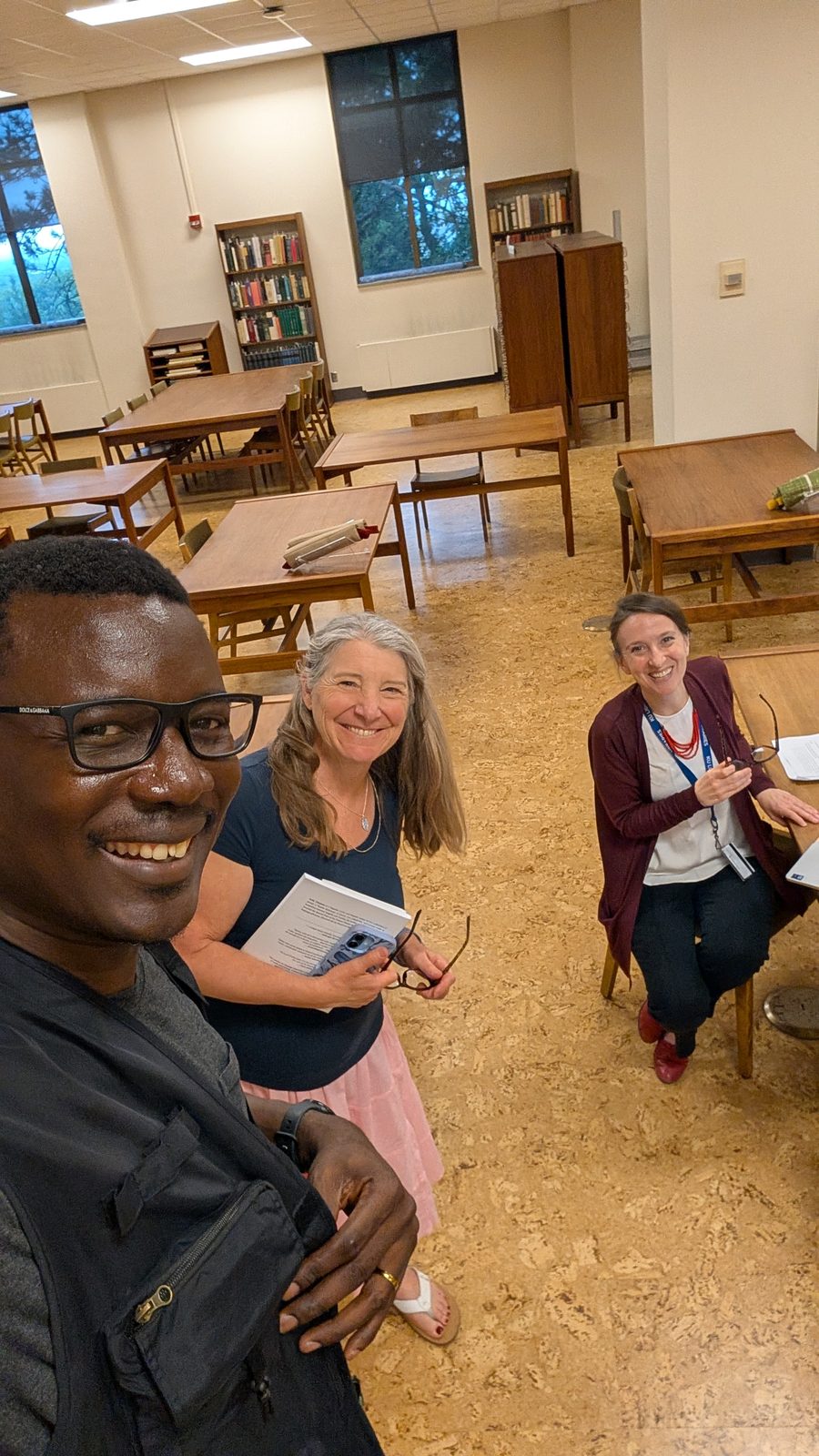
In the reading room at the Kenneth Spencer Research Library, University of Kansas, with Elspeth Healey and Elizabeth MacGonagle, on the day of the interview. The Spencer holds more than a hundred Onitsha pamphlets, twenty-one of them digitised.
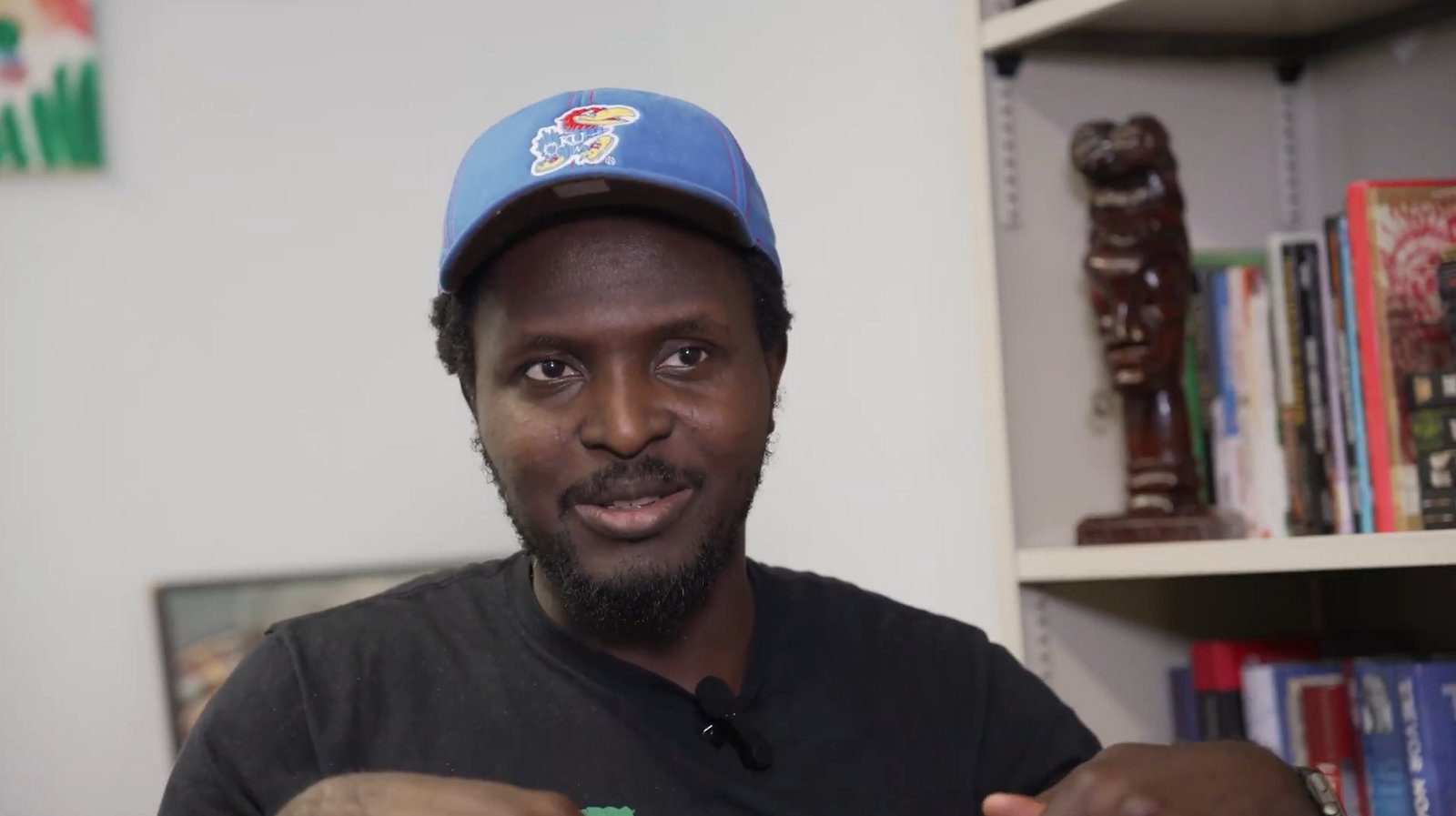
James Yeku, April 2026. On what a print culture becomes once it has been scanned — what digitisation carries across, and what it quietly leaves behind.
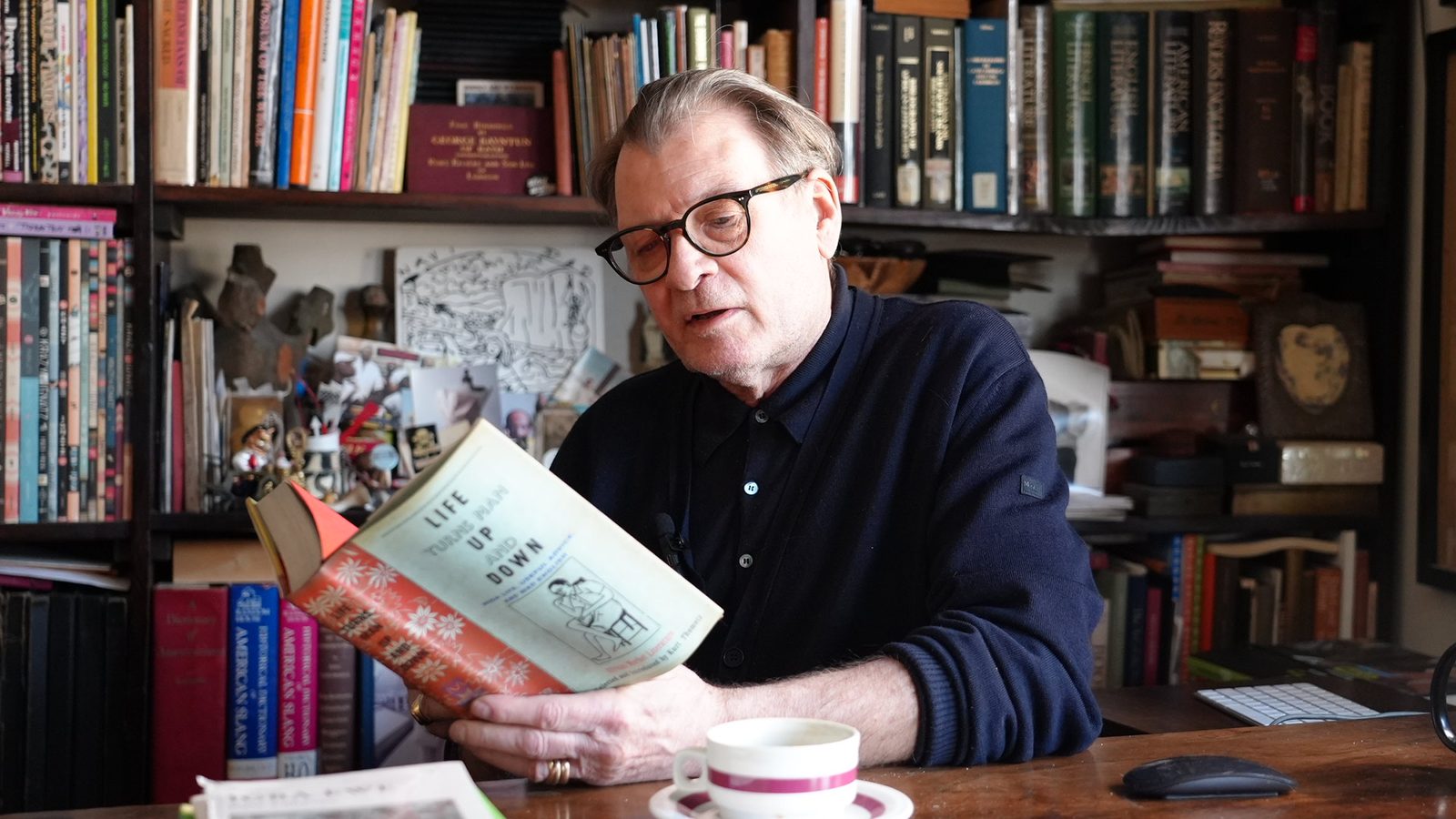
Kurt Thometz reads from his own book — Life Turns Man Up and Down, the anthology of market pamphlets he selected and introduced, and from which this film takes its name.
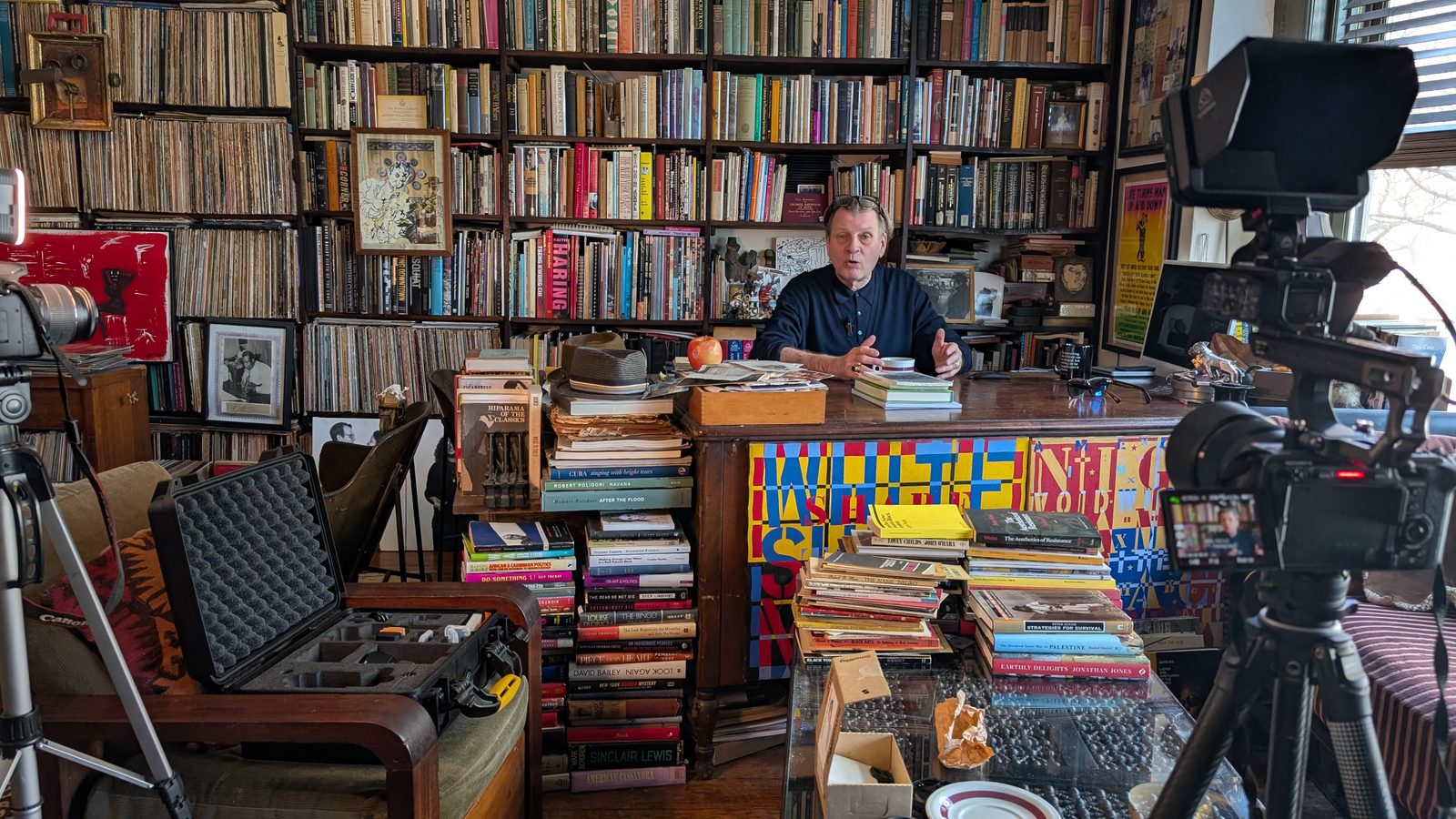
Two cameras and a wall of shelves. The framed poster over Thometz's right shoulder is a Life Turns Man Up and Down broadside.

On the stoop, between set-ups.
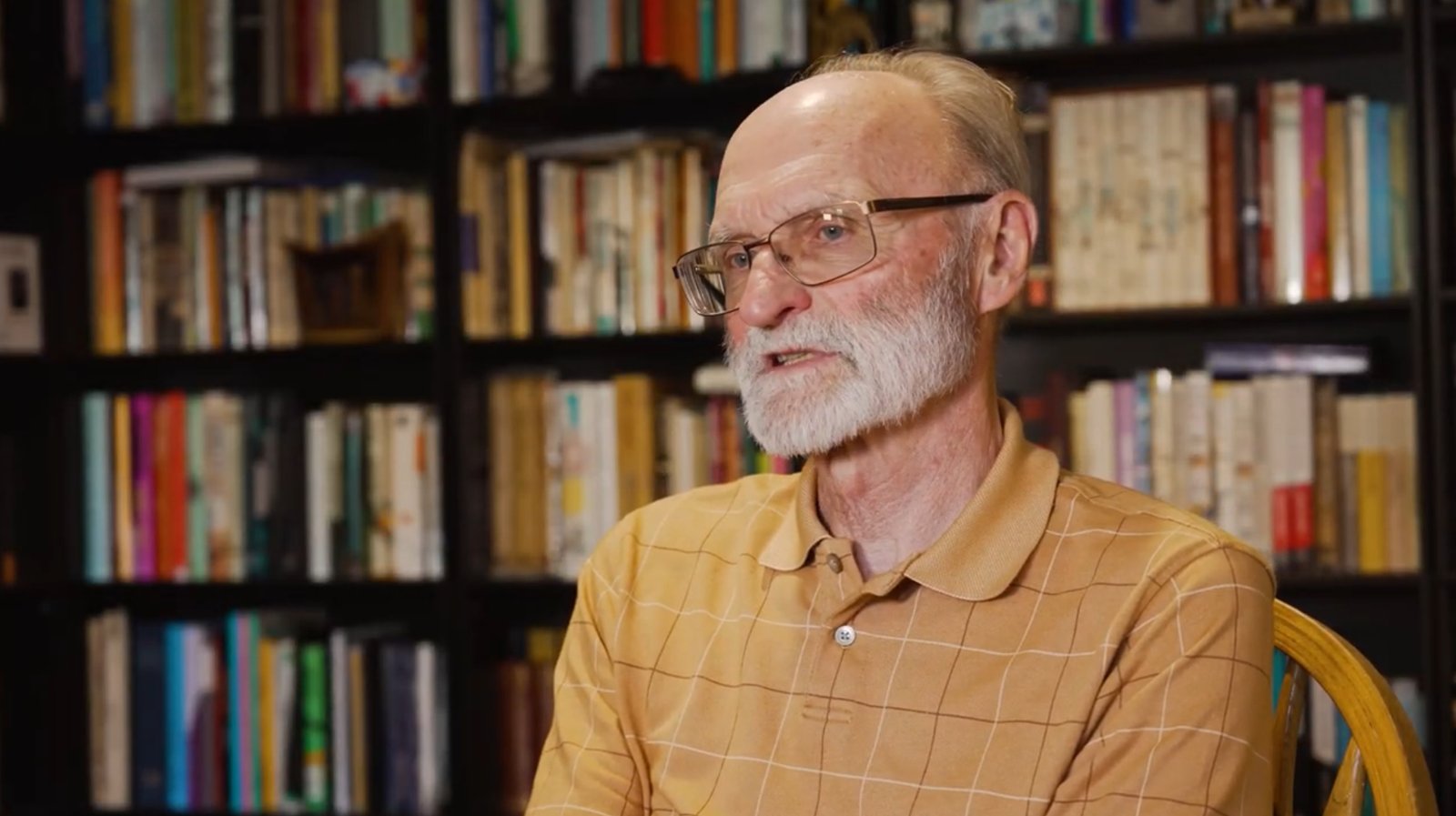
Ronald P. Schaefer, professor of linguistics, on camera in June 2026 — the same man whose runs of the African linguistics journals now sit in the OlongoAfrica Library.
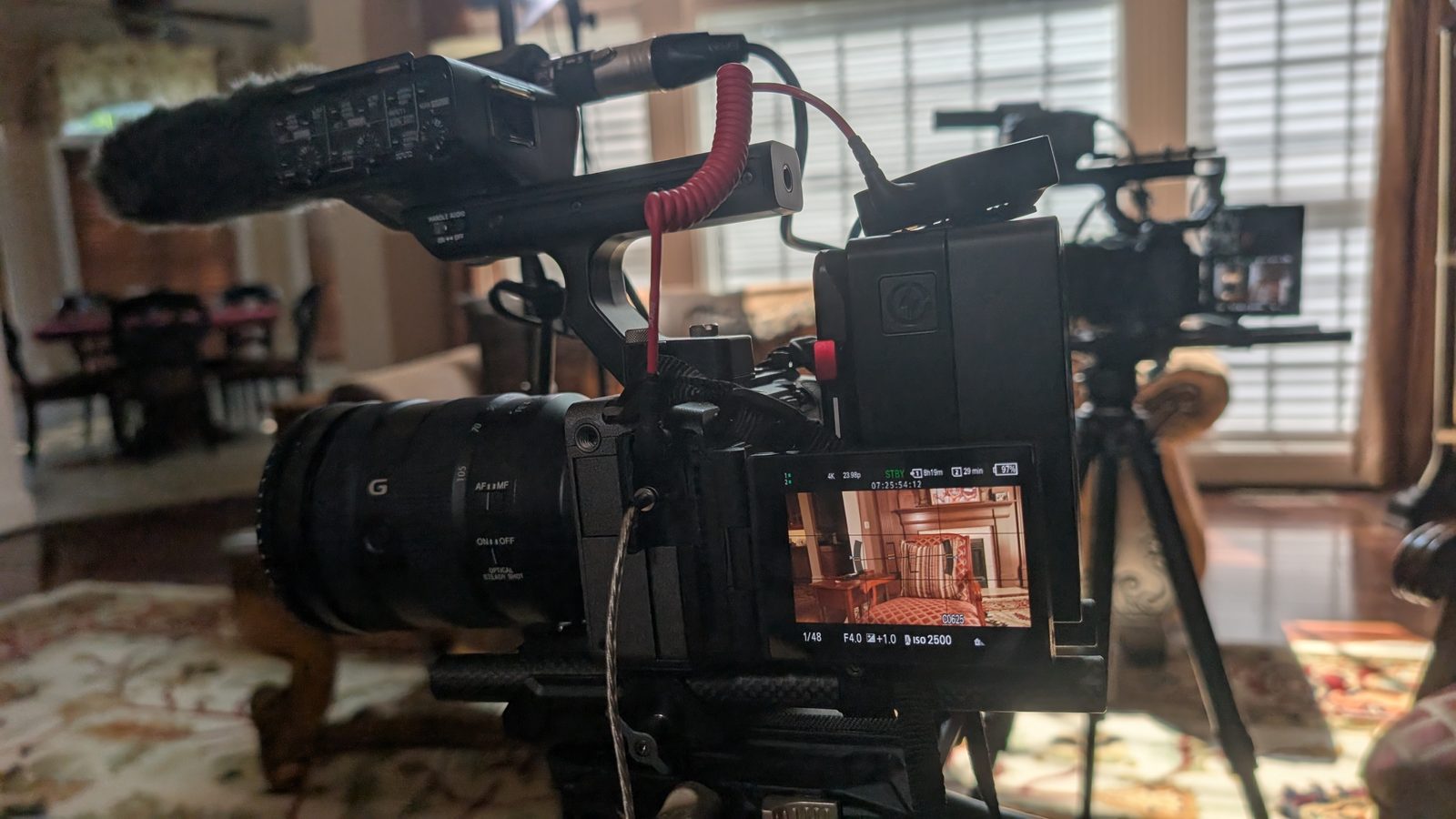
The A-camera built and standing by, before the Uju Anya interview.
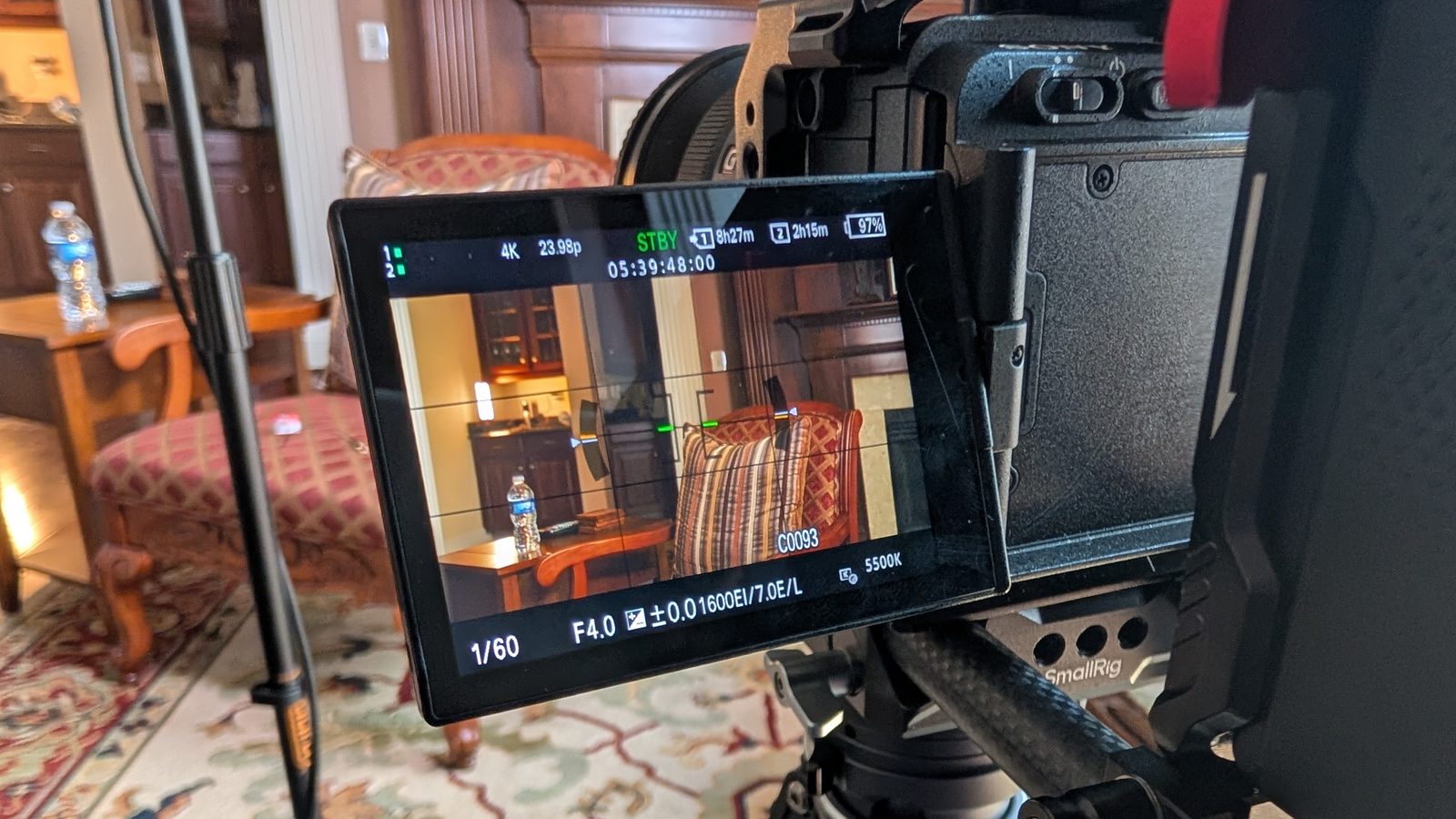
Lit and marked, waiting for its subject.
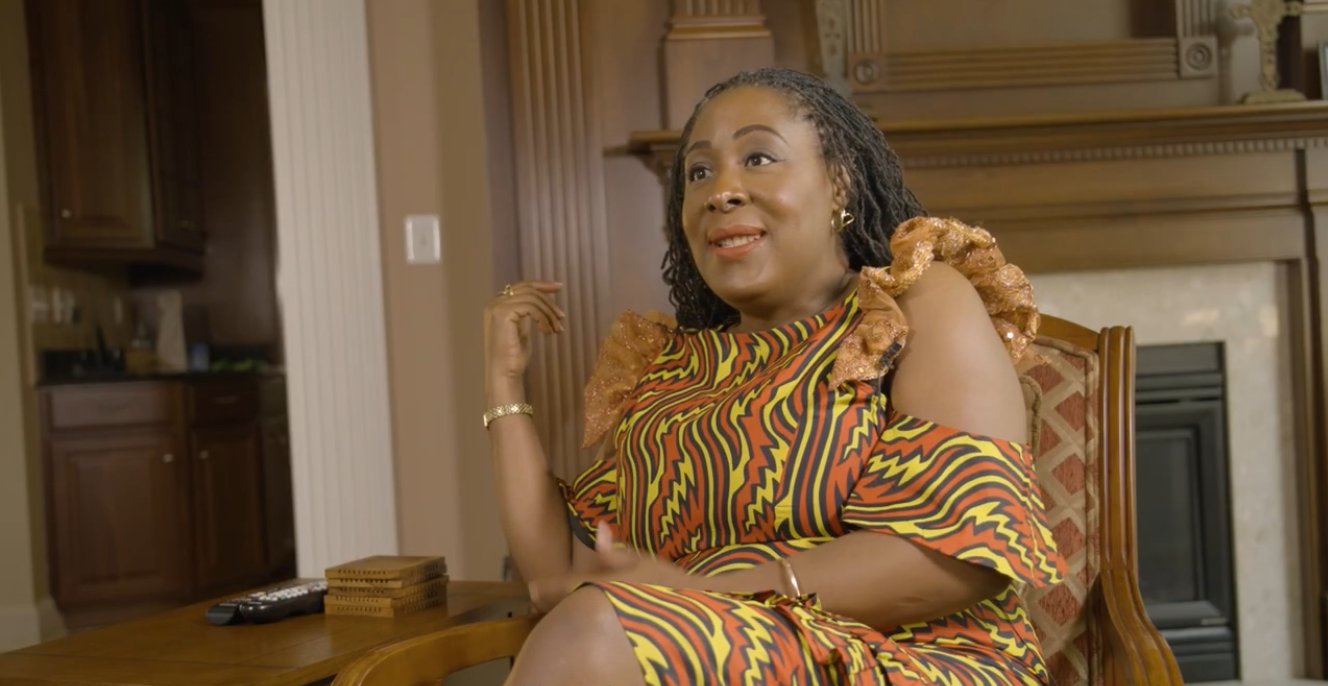
Uju Anya, in the chair the previous frame was waiting for — talking about a father who published under three names, sixty years after he did it.
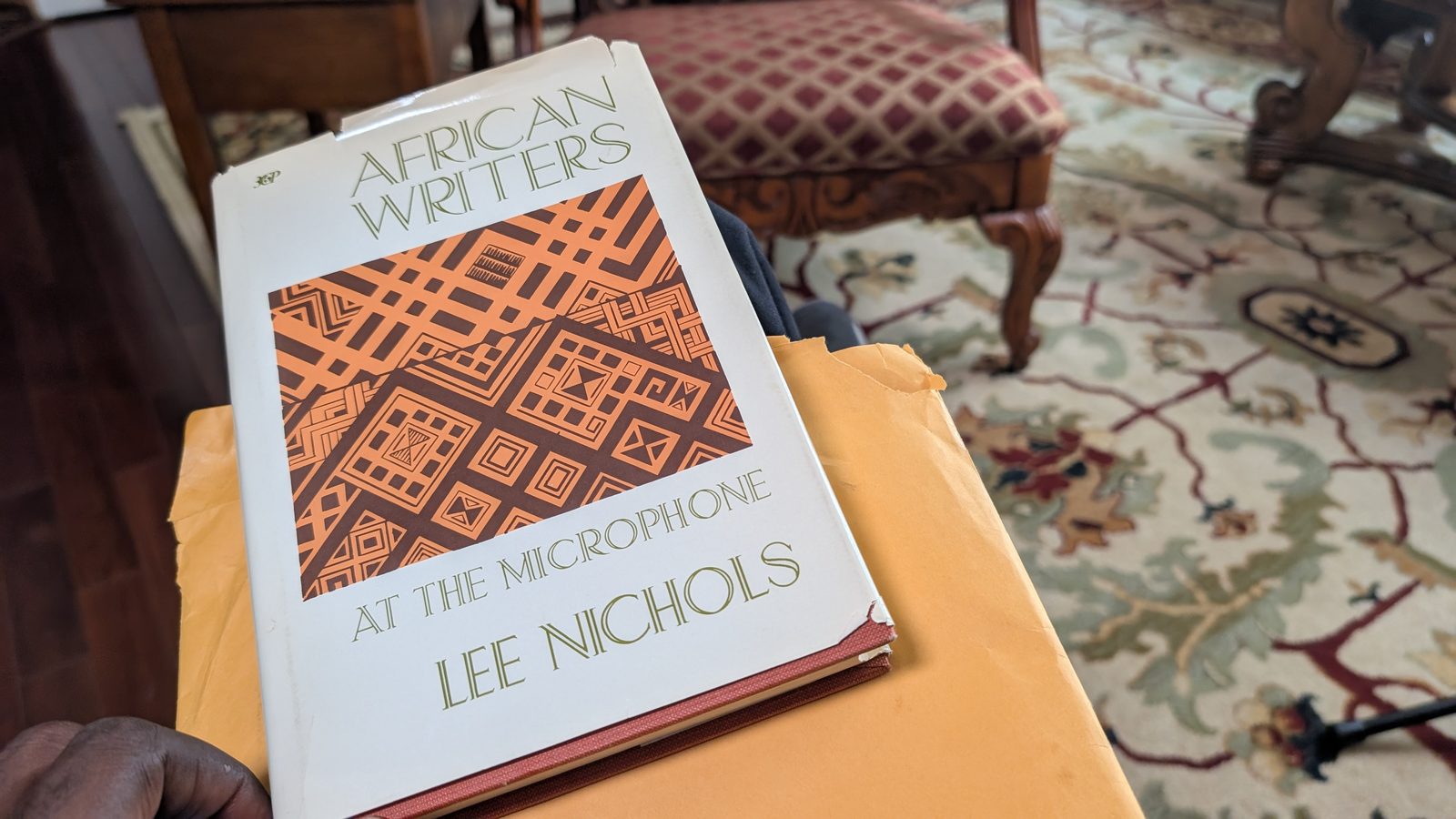
Lee Nichols was a Voice of America broadcaster who, in 1974, sat down with a number of Nigerian writers — Udegbunem Anya among them. The conversations returned again and again to language: which one an African writer should work in, and what is lost either way. The book is not the transcripts. It is Nichols's account of what he found, and a record of his time in Nigeria.